When the Camera Sees What Clothes Hide: Nudism and Photography Through the Lens of Salva Ferma
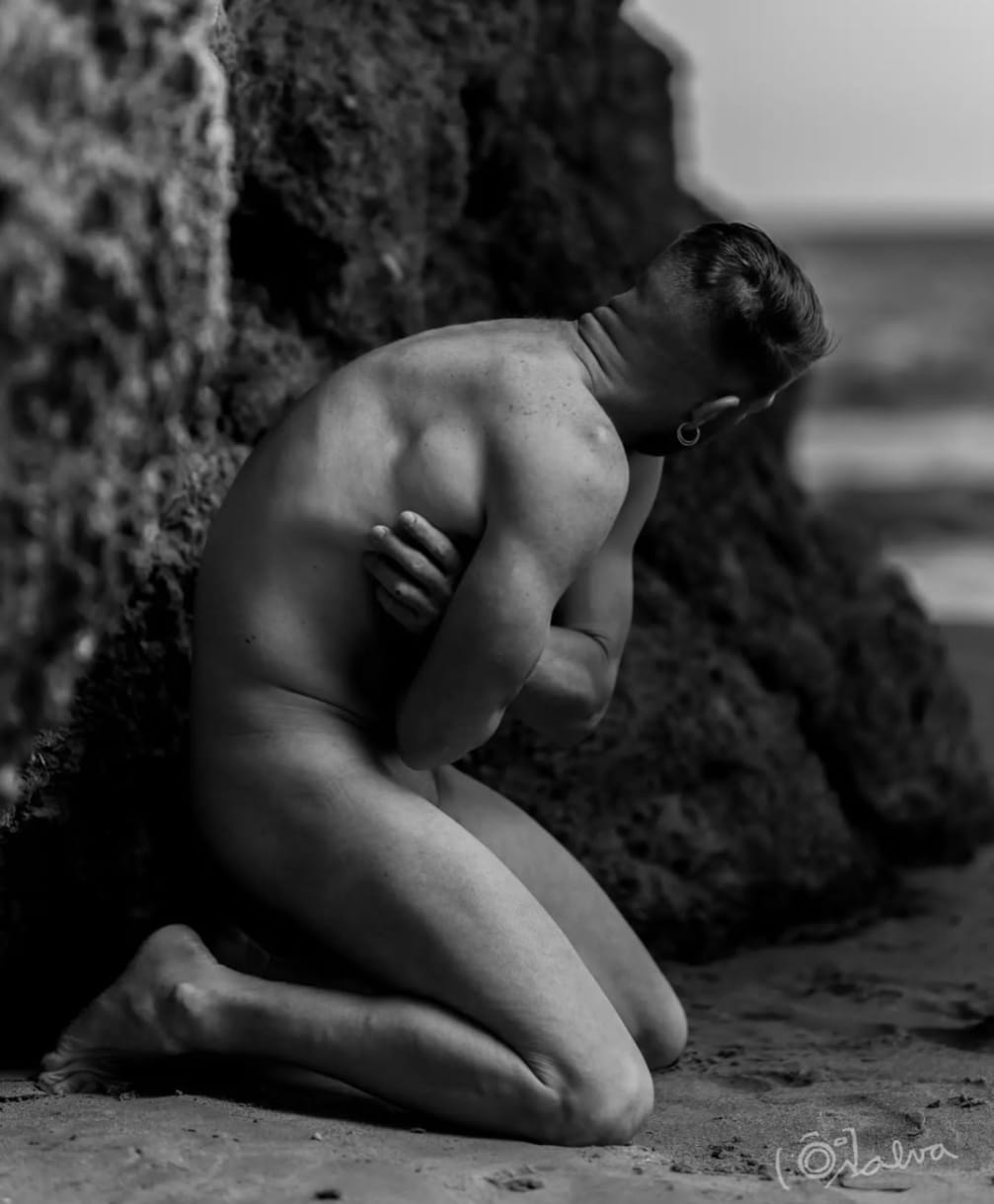
There is a photograph that stays with you.
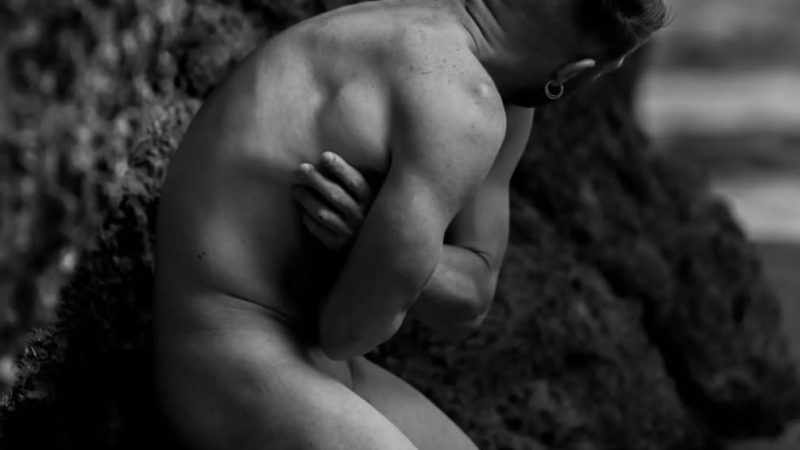
A person kneeling on the sand, back to the camera, head bowed, arms wrapped around themselves. Rocks behind them, the sea somewhere in the distance. Black and white. No colour to distract from what the image is really about: a human body, completely exposed, and somehow completely protected at the same time.
This is the work of Salva Ferma. And it’s the kind of photography that makes you think differently about what nudism actually means.
The Body as Subject, Not Object
Most photographs of naked bodies are about the nakedness. The absence of clothes becomes the point, something to notice, something to react to, something to judge.
Salva’s photography is about something else entirely. In his images, the body is simply the medium through which something deeper becomes visible: vulnerability, dignity, age, history, presence. The fact that the subject has no clothes is almost incidental. What you see first is the person.
This is, we think, the most honest visual representation of what nudism actually is for those of us who have practised it for years. Not exhibitionism. Not provocation. Simply the removal of the layer that usually stands between a person and the world, and the discovery of what’s underneath.
Light, Shadow, and the Courage to Be Seen
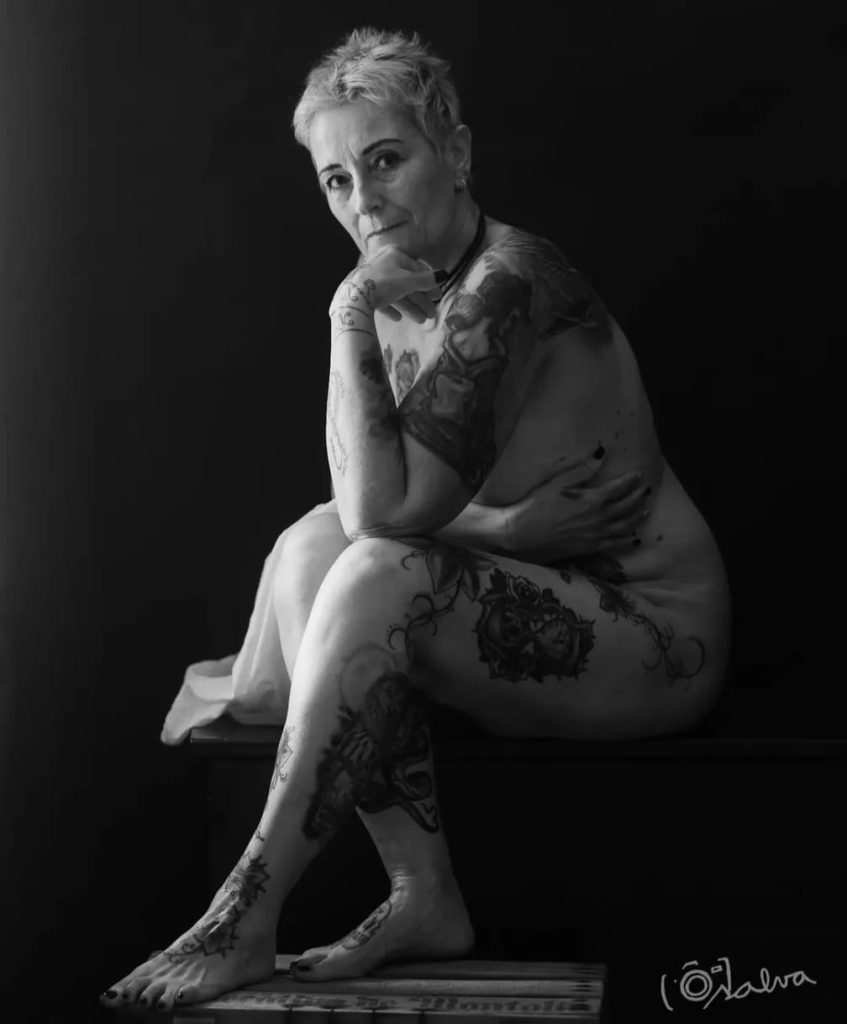
Salva works primarily in black and white, and the choice matters. Colour photography of the naked body carries cultural baggage, it reads as documentary, or erotic, or clinical, depending on context. Black and white removes all of that. What remains is form, light, shadow, and the particular quality of a person’s presence in a moment.
Look at the portrait of the tattooed woman. She is seated, looking directly at the camera, completely at ease. Her body carries decades of living, the tattoos that cover her arms and legs are a biography written in ink, and she offers all of it to the lens without hesitation or apology. She is not performing confidence. She simply has it.
This is what we see, again and again, in the people who join us on our trips through the Pyrenees or along the Caribbean coast of Colombia. The ones who have been practising nudism for years don’t look like they’re doing anything. They’re just there. The body stops being a statement and becomes simply a body, specific, personal, unrepeatable.
Salva’s photography captures exactly that quality of presence.
The Ethics of Photographing Naked Bodies
This matters more than it might seem.
There is an enormous amount of photography of naked bodies in the world, and almost none of it treats its subjects with the care that Salva brings to his work. The consent, the relationship between photographer and subject, the intention behind the image, these things are invisible in the final photograph, but they are present in it. You can feel them.
When we look at Salva’s images, we feel that the people in them chose to be there. That they trusted the person behind the camera. That the photograph is something made together, not taken from someone.
In the nudist community, this distinction is everything. We have spent years explaining to people outside the community that nudism is not about being seen, it’s about being free. The best nudist photography understands this. It shows freedom, not exposure.
What Photography and Nudism Share
Both require the same thing: the willingness to let go of control.
When you take off your clothes in nature for the first time, really for the first time, in a wild place with wind on your skin and no resort infrastructure around you, there is a moment of complete exposure that is also, paradoxically, a moment of complete relief. The performance stops. Whatever version of yourself you were maintaining through your clothing, your appearance, your presentation, it falls away, and what’s left is simpler and more real.
Photography at its best creates the same experience for the viewer. A great photograph strips away everything that isn’t essential and leaves you with something true.
Salva’s work does both things simultaneously. His subjects are literally naked, and his images are also naked, clear, undecorated, honest.
A Note on Beauty
We want to say one more thing, because it matters to us.
The people in Salva’s photographs are not all young. They are not all conventionally beautiful. They are real bodies, with tattoos and folds and the particular way that skin settles on a person who has lived in it for fifty or sixty years. And they are, without exception, beautiful.
Not beautiful despite these things. Beautiful because of them.
This is what we try to create on our trips: spaces where people can be exactly as they are, and where that is not just accepted but genuinely valued. The 60-year-old who has been hiking naked in the Pyrenees for three days doesn’t look like a magazine. They look like a person who is completely alive and completely themselves.
Salva’s photography is evidence that this is, in fact, beautiful. That a camera aimed with honesty and respect at a real human body will always find something worth seeing.
Every Body, Without Exception
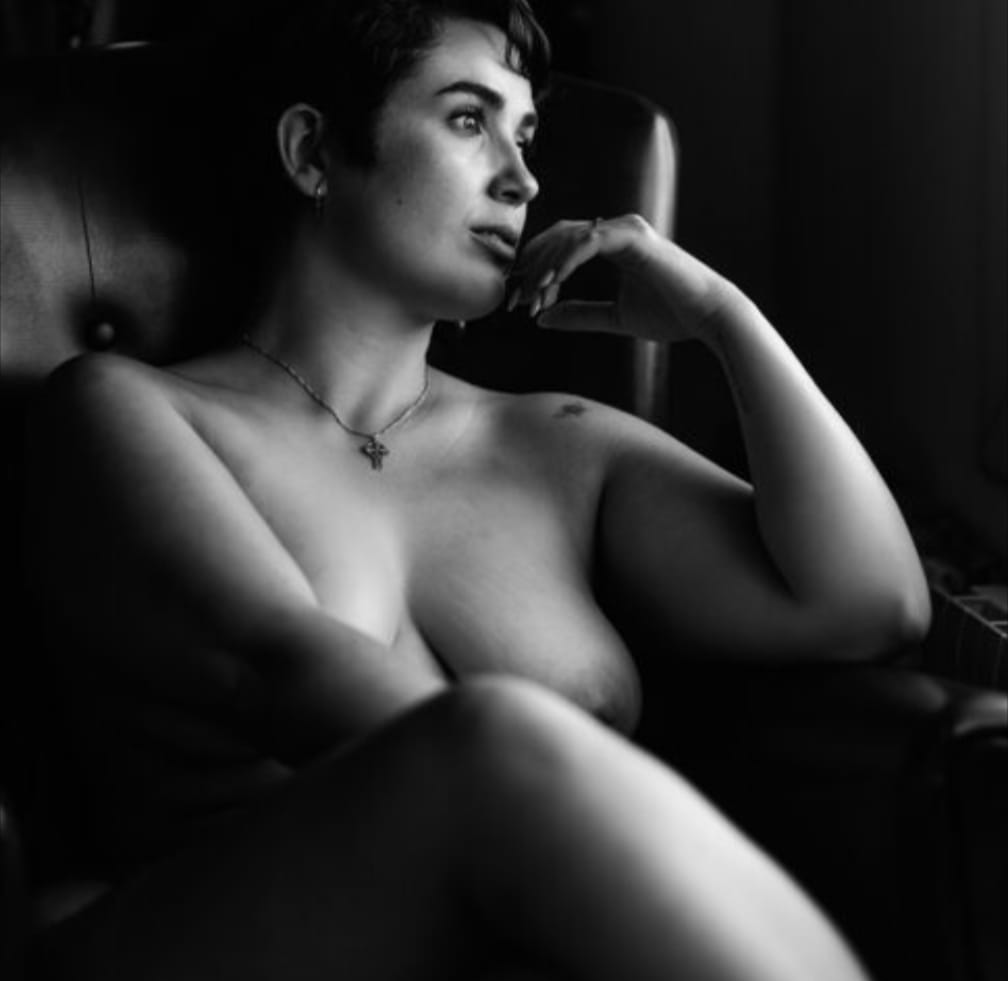
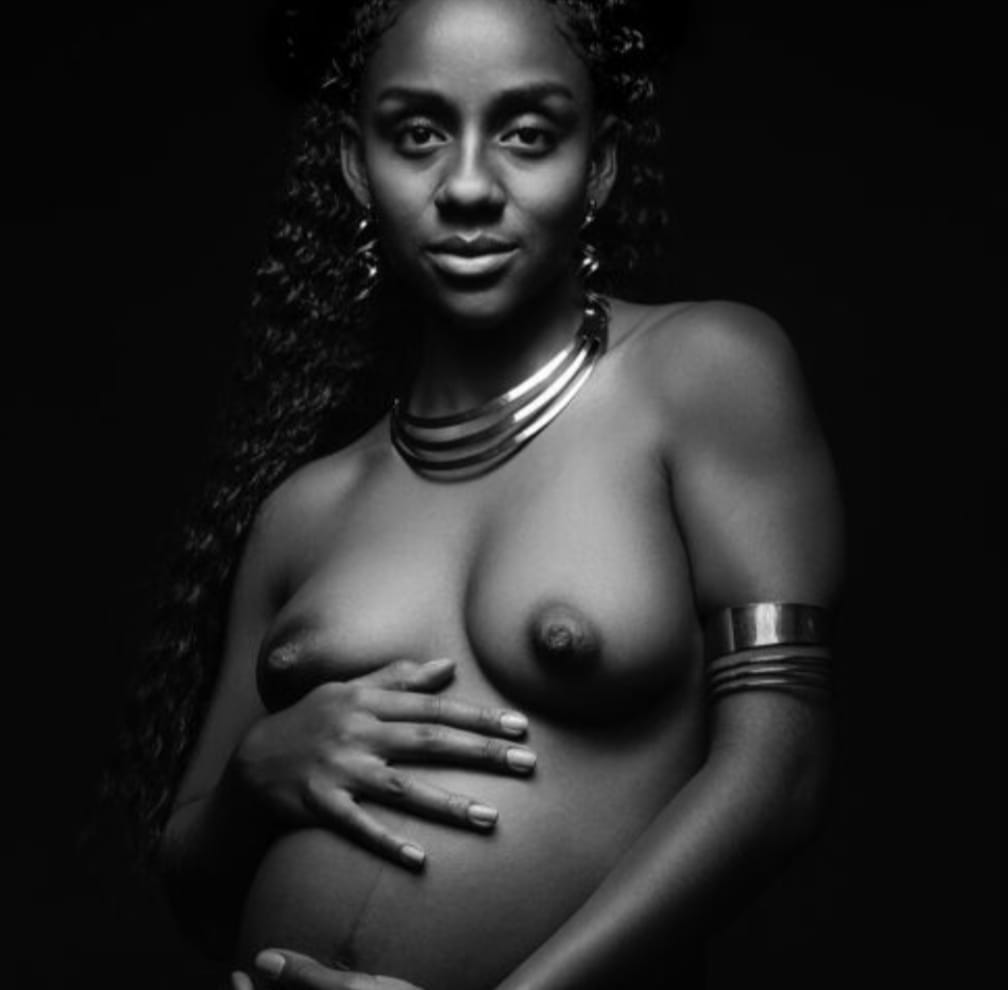
One of the things that strikes you when you look at Salva’s work as a whole is the range of bodies he photographs. Young and old. Thin and full. Tattooed and bare. Black and white skin. Bodies that have given birth, bodies that carry illness, bodies that the fashion industry would never put on a cover.
He photographs all of them the same way: with patience, with light, with complete attention.
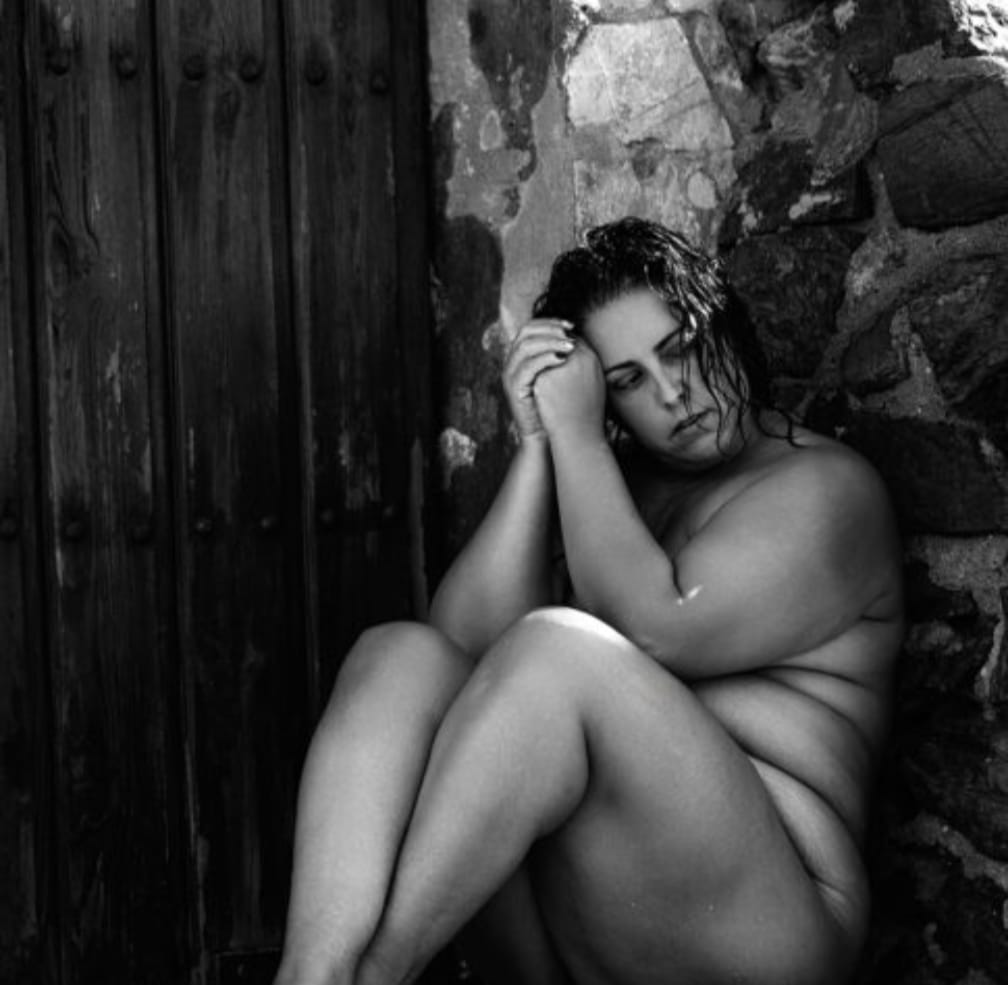
There is a photograph of a young woman sitting against a stone wall, her body full and round, her hair wet, her eyes closed. She is not performing vulnerability, she is simply in it, and the camera is simply there, witnessing. The image has the quality of a painting from another century, when fullness was not something to apologise for.
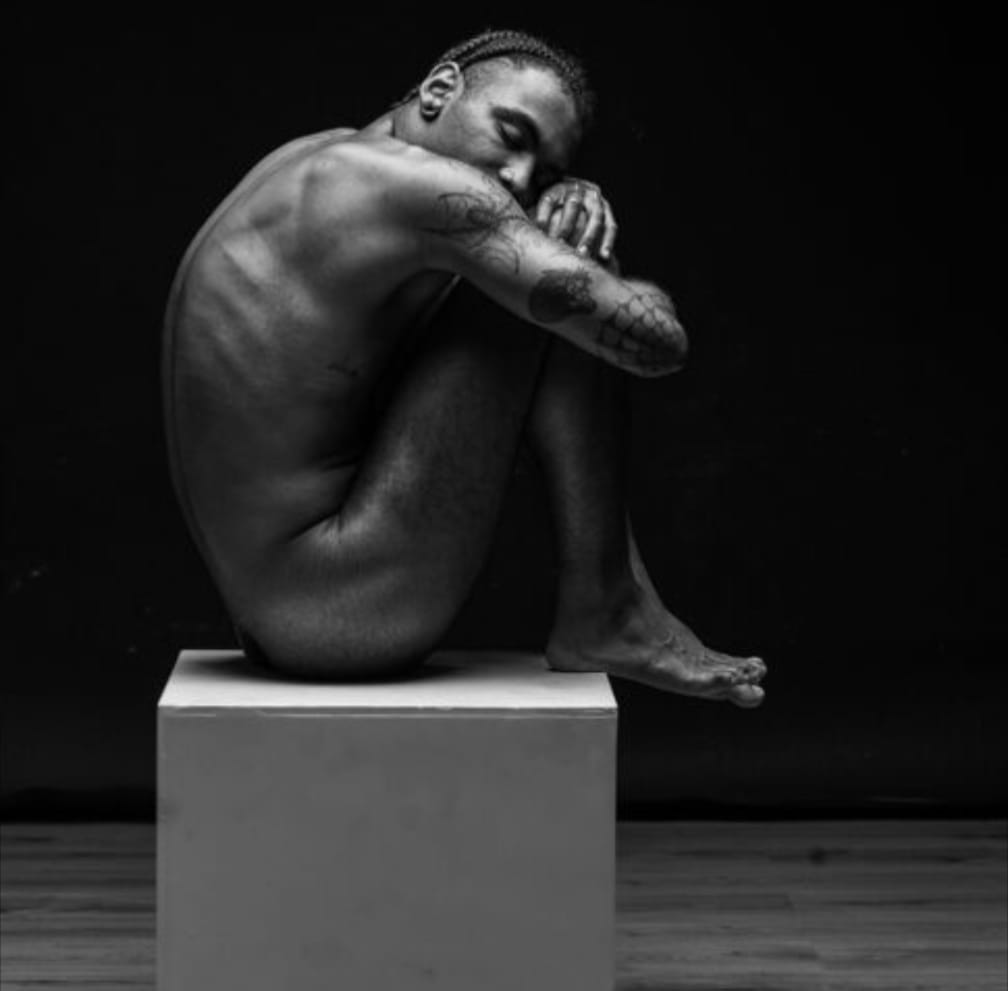
And then there is the man on the white pedestal, his dark skin absorbing the light, his body curled into itself like a living sculpture. The pedestal is the key detail, Salva is saying, without words, that this body belongs in a museum. That it deserves to be looked at with the same attention we give to art.
This is what we try to practise in the nudist community, and what we try to create in our trips: the radical idea that all bodies are worthy of being seen. Not tolerated. Not included as a gesture. Actually seen, with genuine attention and respect.
Salva’s photography makes this argument better than any words could.
The Naked Body and Love
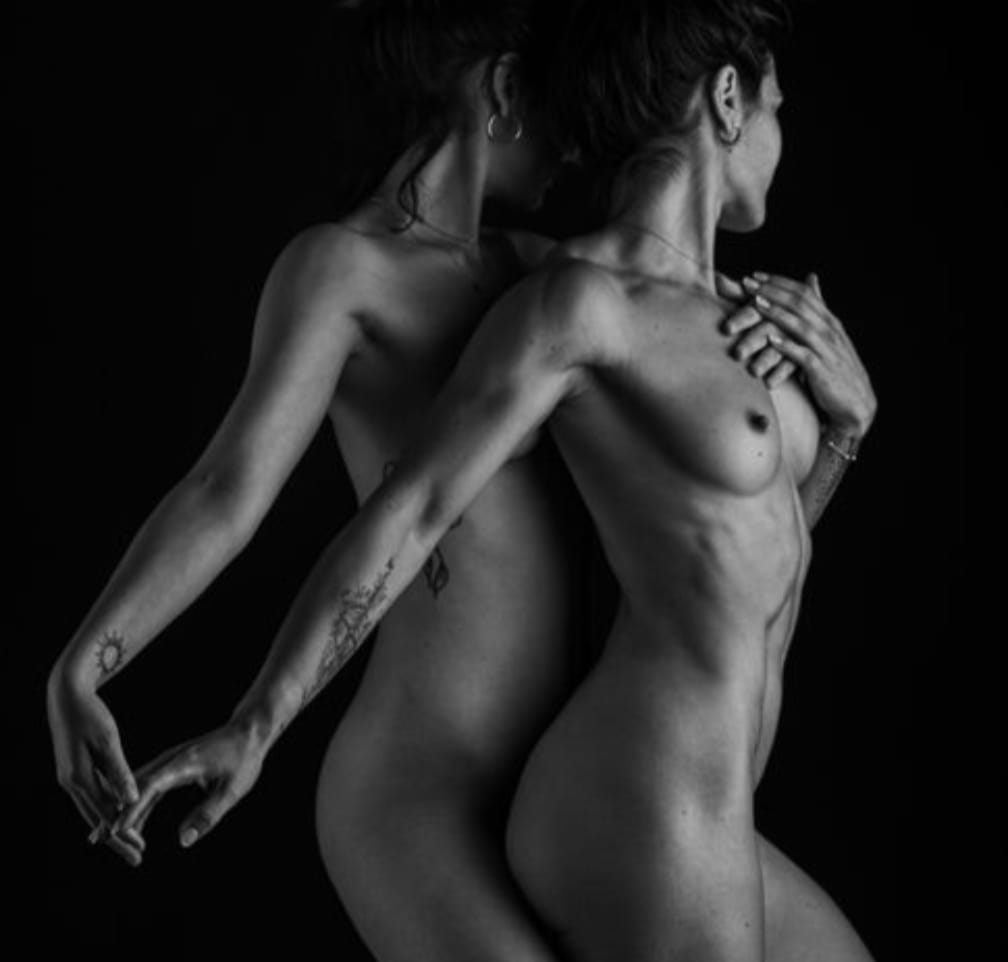
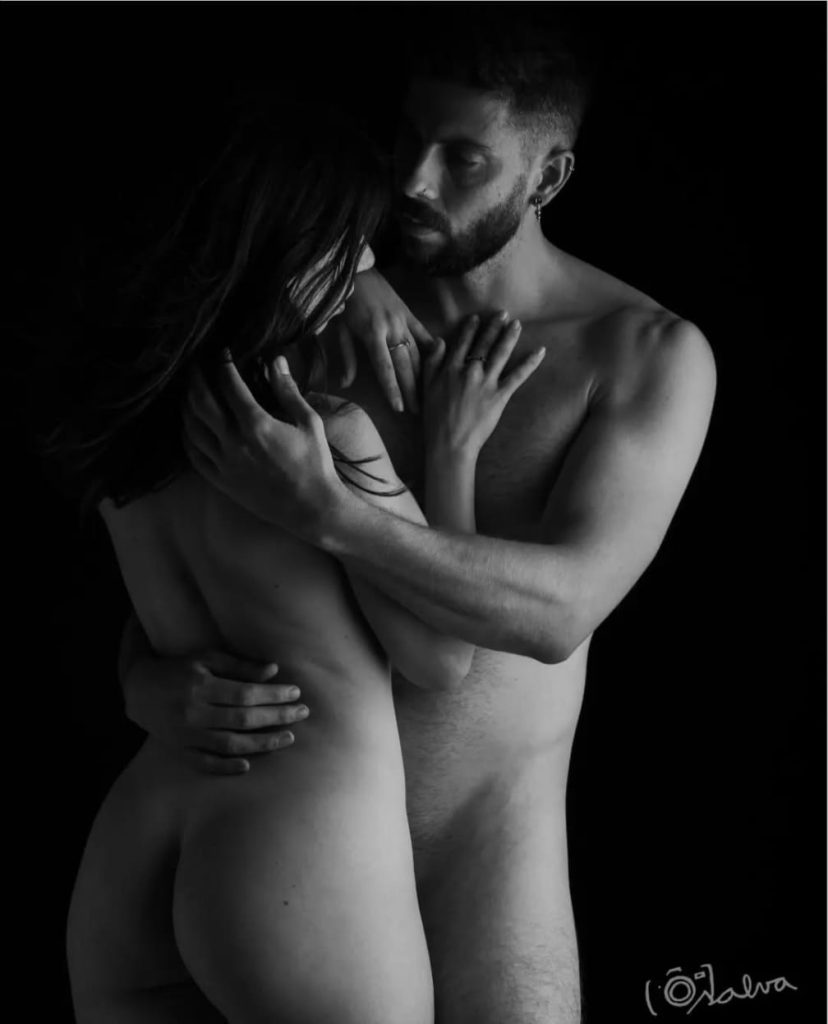
There is another dimension to Salva’s work that goes beyond individual bodies: the photographs of people together.
Two women, backs turned to each other, one reaching across to rest her hand on the other’s shoulder. The gesture is so small and so complete, protection, tenderness, the particular intimacy of two people who know each other’s bodies without pretence.
A couple embracing, the man’s arms wrapped around the woman from behind, his face above hers, both of them still. It is not a sexual image. It is an image about what it feels like to be held by someone you trust completely, the particular safety of being naked and not alone.
Nudism, at its deepest, is about exactly this. The removal of physical and social armour in the presence of people you trust. The discovery that vulnerability, shared, becomes something else entirely, not weakness but intimacy. Not exposure but connection.
We have seen this happen on our trips more times than we can count. A group of strangers who spent the first morning slightly awkward with each other, and by the third day were laughing and swimming and sharing meals with the ease of old friends. The nakedness accelerates something. It removes the performance, and what’s left is the real person , and real people, it turns out, connect much faster than their dressed versions.
Salva photographs this quality of connection with the same honesty he brings to individual bodies. His couples and groups are not staged. They are people who are actually there, actually together, and the camera simply records what that looks like.
It looks like love.
About Salva Ferma
Salva Ferma is a photographer whose work explores the human body with sensitivity, technical precision, and a rare quality of respect for his subjects.
You can find his work at salvaferma.com and follow him on Instagram at @salvaferma.
All photographs in this article are © Salva Ferma and reproduced with permission.