Nudism After 50: Why Everything Changes When You Finally Stop Caring
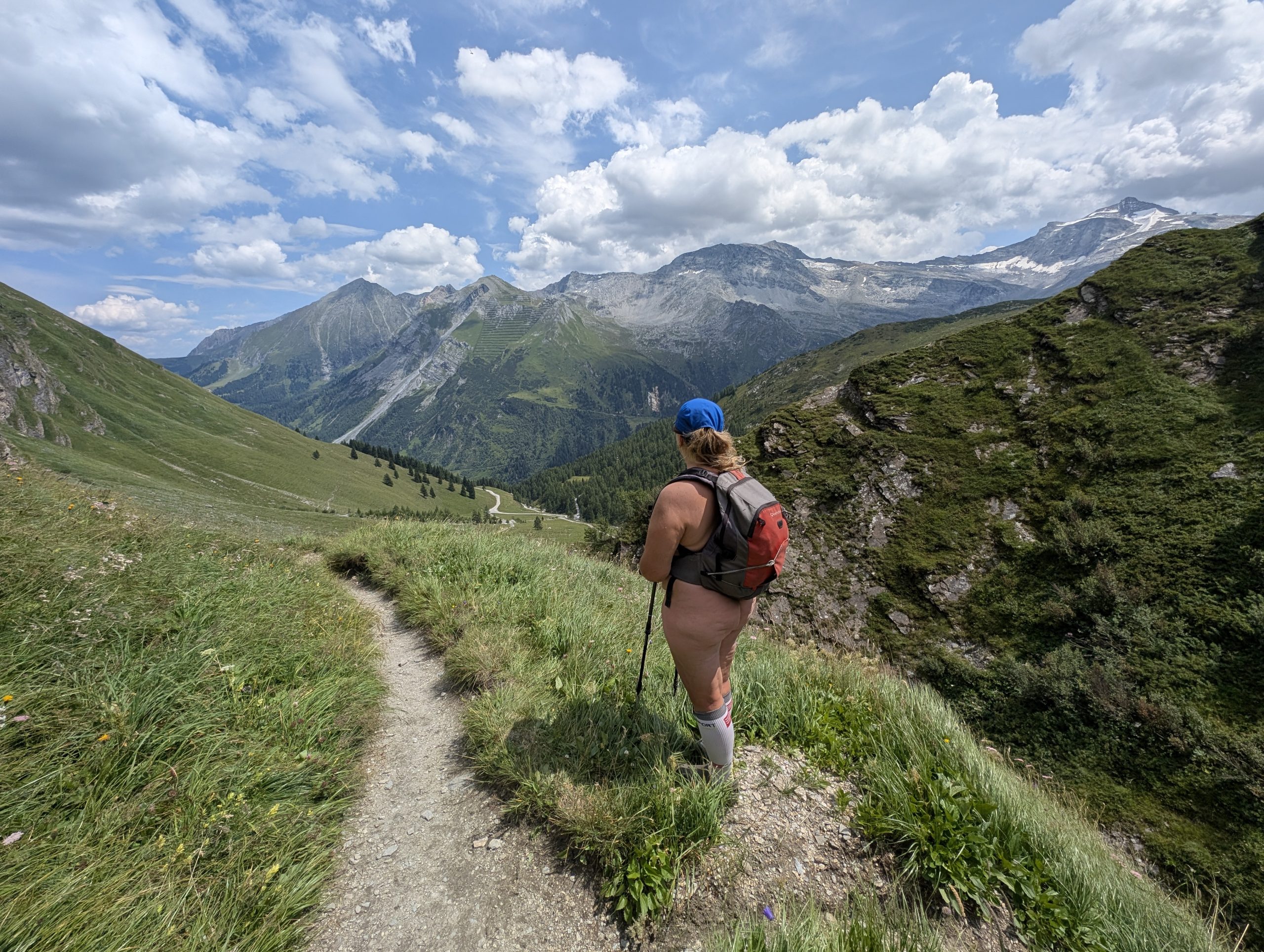
By Angela & Carles — Travel Naked Couple
There’s a moment that many nudists describe in almost exactly the same words.
You’re standing somewhere — maybe on a mountain trail in the Pyrenees, maybe on a quiet beach far from the tourist crowds, maybe in a forest clearing with a small group of people you’ve known for less than 48 hours. The sun is on your skin. There’s a breeze. And something in you that used to be tense… isn’t anymore.
For some people, this moment happens in their twenties. For others, it takes until they’re 50, 55, or 60 to truly feel it.
And here’s what we’ve noticed after years of guiding nudist hikes, organizing naturist trips, and talking to hundreds of people in our community: the ones who discover nudism — or rediscover it — after 50 often have the most profound experience of all.
This is their story. And in many ways, it’s ours too.
The Weight We Carry Into Midlife
By the time most of us reach our fifties, we’ve spent decades inside a particular kind of relationship with our bodies.
We’ve compared ourselves to magazine covers and social media feeds. We’ve dressed to hide things — a belly, a scar, the visible signs of a life fully lived. We’ve stood in front of mirrors with a critical eye, cataloguing everything that doesn’t match the image we were told we should have.
This is true for women, who face decades of messaging about how their bodies should look at every age. But it’s equally true for men, who carry their own invisible burden: the idea that a «good body» is a young, strong, productive body — and that anything else is a kind of failure.
By 50, most of us have also been through things that leave marks. Pregnancies. Surgeries. Illness. The slow, honest transformation of a body that has actually been used — for work, for love, for adventure, for survival.
And then nudism asks you to take all of that, and simply… be present with it.
No clothes to hide behind. No curated angle. No filter.
Just you.
What Changes After 50 (That Nobody Tells You About)
When we first started organizing nudist hiking trips, we expected that older participants might be more hesitant, more self-conscious, more likely to need reassurance.
We were completely wrong.
Again and again, we’ve watched people in their fifties and sixties walk out of their first nude hike with a lightness that younger participants often take weeks to find. There’s something that shifts when you’ve lived enough life to know — really know, not just intellectually understand — that other people’s opinions of your body are simply not worth the energy you’ve been spending on them.
Here’s what we’ve observed, and what we’ve lived ourselves:
You stop performing.
In your twenties and thirties, even in nudist spaces, there’s often a residual anxiety about how you appear. Are you holding your stomach in? Are you walking in a way that looks confident? Nudism in midlife tends to strip that performance away. You’ve earned the right to simply exist in your body without putting on a show.
Your relationship with aging shifts.
A body at 55 tells a story. The lines around your eyes are from years of laughing and squinting into the sun. The softness at your belly is from meals shared with people you love. The scar on your knee is from the hiking accident that also gave you one of the best stories you’ve ever told.
In nudist spaces, especially among other people over 50, bodies stop being objects of judgment and become something more interesting: evidence of a life. We’ve had conversations on nude trails about surgeries and grief and parenthood and divorce that we never could have had in any other context. There’s an honesty that nakedness invites.
The quality of presence deepens.
This is the one that surprises people most.
When you remove the last laye, literally and metaphorically, something happens to your attention. The mountain feels more immediate. The river sounds different. The air on your skin becomes information. We’ve heard this described as meditation, as therapy, as coming home.
Neurologically, it makes sense. When the body is fully present and unenclosed, the nervous system responds differently. The constant low-level background noise of self-monitoring, am I dressed appropriately, do I look okay, what do people think, simply stops. And into that silence, the world rushes in.
The Conversations We Have on the Trail
We want to tell you about a man we’ll call Martin. He joined our Pyrenees Naked Walking Week two summers ago. He was 58, Dutch, recently retired, and had been practicing nudism at resorts for over twenty years.
«I know nudism,» he told us on the first morning, a little apologetically. «I’m not sure what I’m going to find here that I haven’t already found.»
By the third day, walking through a valley at 2,000 meters with the Pyrenees spread out around us, he went quiet for about an hour. Just walking. Just breathing.
That evening, over dinner, he said something we’ve thought about many times since.
«I’ve been naked in a lot of places. But I’ve never felt this naked before. I think because up here there’s nothing to hide behind. Not even the idea of a resort or a beach or a ‘nudist space’. There’s just the mountain and your body and the fact that you’re alive.»
Martin came back the following year. He brought his partner.
This is the experience we hear described, in different words, again and again by people over 50 who step outside the familiar nudist resort circuit and into something wilder and more demanding: a long hike, an expedition to Colombia, a week of moving through landscapes that don’t care at all about your age or your body or what you used to look like.
Why Nudism at This Stage of Life Is Different From Nudism at 25
When you’re young and you discover nudism, the experience is often about liberation from external judgment. You’re testing the world’s reaction. You’re proving something, to yourself or to others.
When you discover , or rediscover, nudism at 50, the liberation tends to be from something more internal. From the voice in your own head that has been running a critical commentary on your body for thirty years. From the habit of dressing not for yourself but for the image you want to project. From the exhausting work of managing how you appear.
This is why, in our experience, nudism after 50 has a particular depth to it. The stakes are different. The things being released are things you’ve been carrying for a very long time.
We’ve watched people cry on nude trails. Not from sadness, or not only from sadness, but from something that feels like relief. Like putting down a bag you forgot you were carrying.
The Body Acceptance Piece (And Why It’s More Complicated Than It Sounds)
We want to be honest about something.
Body acceptance isn’t a destination you arrive at. It’s not something that nudism gives you automatically after a certain number of hikes or beach days. We know long-term nudists in their sixties who still struggle with self-criticism. We know people who try nudism for the first time at 52 and feel immediately, effortlessly free.
What nudism does, especially in nature, especially in the kind of small, intentional groups we create — is give you repeated, low-stakes opportunities to practice something different. To notice the critical voice and choose, for this hour, for this hike, not to listen to it.
Over time, that practice accumulates.
There’s also something important about being surrounded by other real bodies. Not the bodies on screens or in advertising, the bodies of actual people in their forties, fifties, sixties, and beyond, moving through the world, laughing, sweating, helping each other over rocks, sitting together at the end of the day with a beer and a sense of having done something real.
These bodies are not perfect by any commercial standard. They are completely, entirely human. And something about being surrounded by them, being one of them, rearranges something inside you.
What We’ve Learned From the People We Guide
Angela and I have been doing this for years now. We’ve guided people through the Colombian jungle, along the Atlantic coast of France, through the Pyrenees in summer heat and unexpected rain. We’ve been with people on their first nude hike and their twentieth.
And the people who come back, the ones who turn a single trip into an annual ritual, who bring their partners, who message us months later to say something shifted, are almost always over 50.
Not because younger people don’t have profound experiences. They do.
But because people in midlife often bring something to these experiences that takes years to develop: a willingness to be changed. A readiness to feel things rather than document them. An understanding, earned through actual living, that the moments that matter are the ones you’re fully present for.
A Note on What «Nudist Travel» Means to Us
We want to be clear about something, because we think it matters.
The trips and hikes we organize are not about performance. They’re not about being the most liberated person in the group or proving how comfortable you are with your body. They’re not parties. They’re not anything that requires you to be someone different from who you are.
They’re simply spaces where your clothes aren’t there to protect you from yourself. Where the conversation tends to go deeper, faster. Where the landscape asks something of you and your body responds.
We keep our groups small, usually between 8 and 14 people, because we’ve learned that this is the size where real connection happens. Where you know everyone’s name by the end of the first day. Where the person you hiked next to this morning is someone you’re genuinely happy to see at dinner.
Most of our participants are between 45 and 65. Many are couples. Many have been practicing nudism for years and are looking for something beyond the resort circuit. Some are trying it for the first time and are terrified and brave in equal measure.
All of them, without exception, have bodies that have lived real lives.
And all of them, in our experience, are capable of the kind of presence and openness that makes these trips what they are.
The Question We Get Asked Most Often
People who are considering joining one of our trips, especially people over 50 who haven’t done something like this before, often ask us a version of the same question.
«Am I too old for this?»
The answer, every time, is the opposite of what they expect.
You are not too old. You are, in many ways, exactly the right age.
The trails are challenging, yes. The days are long. The weather in the Pyrenees does whatever it wants. Colombia is not for people who need to be comfortable every minute.
But the experience, the thing that actually matters, the reason people come back year after year, doesn’t require youth. It requires willingness. Curiosity. The kind of courage that isn’t reckless but is real.
And in our experience, people in their fifties and sixties tend to have exactly that.
An Invitation
If you’re reading this and something in you recognizes what we’re describing, the exhaustion of decades of self-criticism, the hunger for something that feels genuinely free, the sense that there might be a different relationship possible with your own body and the people around you, we’d like to talk to you.
Not to sell you something. Just to tell you what we’ve seen happen to people who decide, at 52 or 57 or 63, that they’re ready for this.
The mountains are there. The trails are real. The groups are small and the people in them are, almost without exception, people you’d be glad to know.
We’ll be in the Pyrenees this summer. We’ll be in Colombia in August.
If any part of this feels like it might be yours, come find us.
Angela & Carles are a couple based in the Costa Brava region of Catalonia. They organize small-group nudist hiking and travel experiences in Europe Colombia and Mexico, and work as body and energy therapists. They’ve been practicing nudism for over a decade and guiding others through it for the last several years.
→ Upcoming trips and activities: acexplora.com → Follow their journey: @travel_nkd on X